Scrawl Riot grrrl · 1990
Scroll down for the full brand identity study.
Scrawl
Show the process. When the audience can see how it was made, they feel invited to make their own.
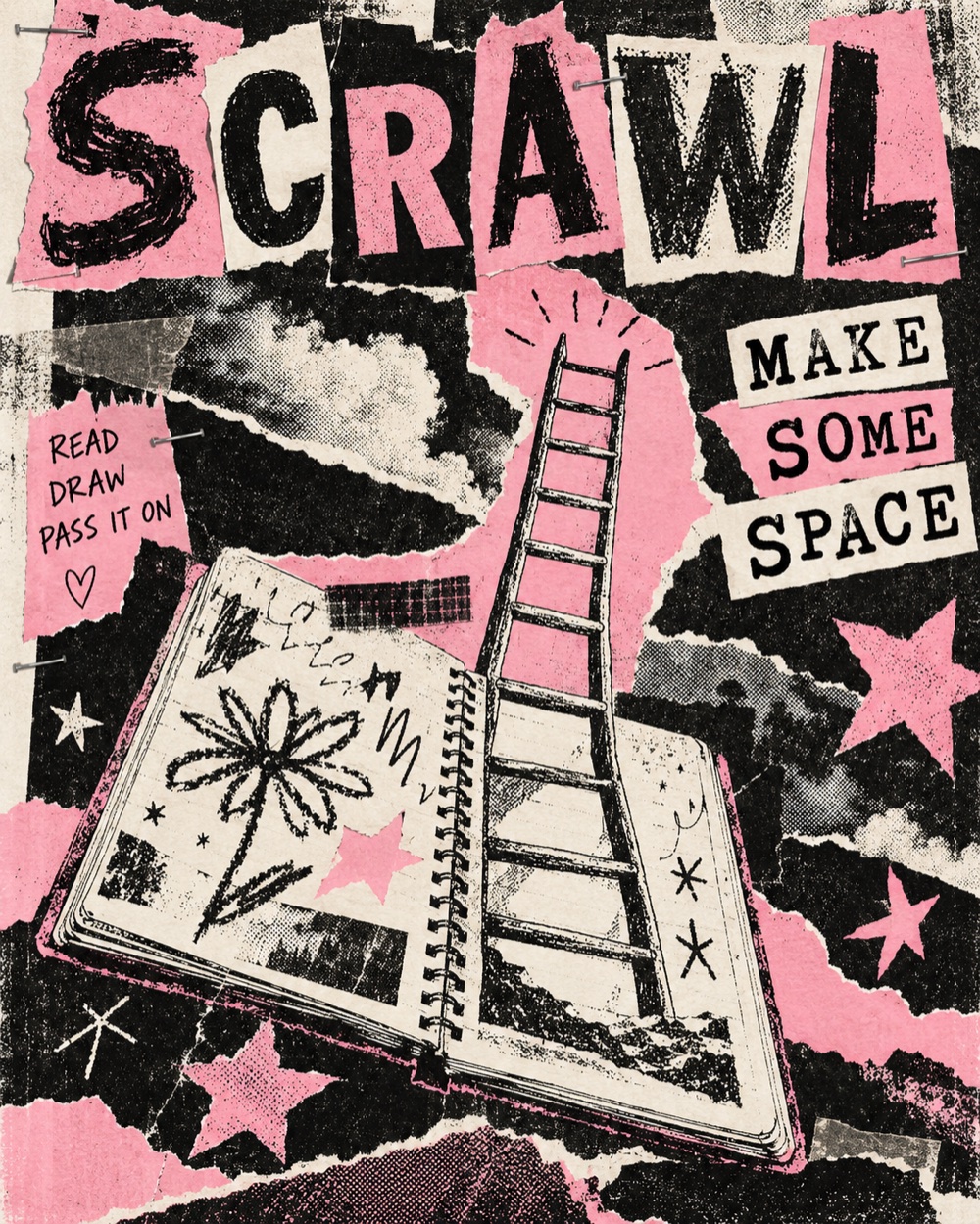
↓ Scroll to the Scrawl brand identity system below · View in the archive
Prints are in preparation and are not available to order yet. Frame and room views are visual simulations; they do not confirm the final product, scale or finish.
The identity system below documents the original design study, made before the current poster artwork.
Show the process. Let them see how it was made.
Scrawl is a zine made by three friends in Olympia on the night shift at a copy shop. Forty copies an issue, a dollar each, sent to anyone who writes in. It follows the riot grrrl and DIY zines of the early nineties: letters cut from magazines, text typed or written by hand, photographs gone muddy with every generation of copying. The rough edges are the message. If you can see how it was made, you can make your own.
- Client
- Scrawl zine
- City
- Olympia, Washington
- Style
- DIY zine
- Year
- 1992
- The rule
- Ransom-letter headlines. Typed or handwritten text. Every page through the copier.
Mark
The name is never set the same way twice. Each issue the letters are cut from whatever magazines are lying around, so the mark is a method, not a drawing: six letters, six sources, each in its own box.
nobody asked us, so we asked ourselves
The strapline is written by hand, fresh each issue. It is never typed.
Issue 3 cut
Copied onto black
Smallest: one letter
The rule running
Run the cover through the copier. Each generation adds contrast, grain and blur. Straight off the typewriter it is not a zine yet. Six or seven copies deep it turns to mud. Typeset it clean and it becomes a magazine nobody can copy.
ZineTwo copies deep. Grainy, black and still readable.
The copier is simulated with grain, contrast and blur. The real one was a borrowed Xerox 1075.
Colour
Whatever the copier gives you: black, the paper, and the greys in between. There is no colour to choose, which is the point. Anyone with a copy shop has the same palette.
Twenty-pound bond, whatever was in the tray.
Everything printed.
Grain and muddy halftones.
Type
Three hands, all real. Headlines are cut-out letters. Notes are written in marker. Body text is typed on the shop's typewriter and pasted in a box. Archivo is used only on this page, to explain the system.
Headline · cut-out letters
write back!
Text · typed, then pasted
this issue: a guide to getting on stage, three record reviews, how to make your own zine for under five dollars.
- HeadlinesCut from magazines, one letter per box.
- NotesMarker, by hand, at an angle.
- NeverDesktop-published headlines or justified columns.
Applications
The cover, an inside spread, a show flyer and the envelope it arrives in. All made the same way, with scissors, a glue stick and a copier.
Voice
First person, angry, funny and warm. Scrawl talks to the reader as a friend who might make the next issue. It never pretends to be a publication.
Nobody asked us, so we asked ourselves.
Written on every cover, by hand.
Scrawl saysThis took us two night shifts and a glue stick. Copy it and pass it on.
NotThe leading independent voice of the Pacific Northwest scene.
- Write like you talk. Lower case is fine. Swearing is fine. Spelling mistakes stay.
- Invite, don't impress. Every issue explains how it was made, so readers can make one.
- Say we. It is written by three people and it says so.
- Price in plain sight. A dollar, or a trade. Written on the cover, in a circle.
What breaks it
The zine's promise is that anyone could have made it. It fails the moment it looks like it needed a studio.
- Typeset cleanA neat typeface headline makes it look like a magazine that needed permission.
- A glossy photoPhotos are copied until they go crunchy. A clean print breaks the spell.
- Straight edgesBoxes are cut with scissors and stuck on crooked. A grid says a designer did it.
- Colour printingColour costs money most readers do not have. Black on paper keeps it copyable.
Lesson for students and teachers: Riot grrrl, 1990
The rule behind Scrawl
Show the process. When the audience can see how it was made, they feel invited to make their own.
the riot grrrl and DIY zine makers · Olympia and Washington DC · 1990–95
Learn how it works
Zines were made with scissors, glue sticks and whatever copier could be borrowed. Letters were cut from magazines, text was typed or hand-written, photographs went muddy with every generation of copying, and the lack of polish announced that anybody could do this.
Learn to spot it
Ransom-note letters in mismatched faces, heavy black copier grain, crunchy halftone photos, typewriter text in boxes, marker hand-writing, staples and a handwritten price.
Use the idea yourself
Show the process. When the audience can see how it was made, they feel invited to make their own.