Hinode Japanese modernism · 1961
Scroll down for the full brand identity study.
Hinode
Find the one symbol that already means your subject, then make it bigger than feels safe and remove everything competing with it.
↓ Scroll to the Hinode brand identity system below · View in the archive
Prints are in preparation and are not available to order yet. Frame and room views are visual simulations; they do not confirm the final product, scale or finish.
The identity system below documents the original design study, made before the current poster artwork.
Hinode
One symbol, one colour, then stop. The sun is the whole idea.
日の出 · 東京
HINODE
Tokyo 1964
to balance the sun's width.
第十八回オリンピック
Brand Guidelines
Uncompromising minimalism. Do not add decorative elements. The red sun is a mathematically perfect circle. Typography must be perfectly centered or perfectly aligned, heavily relying on vast amounts of negative space to create tension.
Alex
Mitchell
Art Director
What breaks it
Adding secondary illustrations (like a tiny vector drawing of Mount Fuji or cherry blossoms) beneath the sun, and dropping a gradient on the background. This destroys the entire philosophy of Kamekura's work: "One symbol, one colour, then stop."
Lesson for students and teachers: Japanese modernism, 1961
The rule behind Hinode
Find the one symbol that already means your subject, then make it bigger than feels safe and remove everything competing with it.
Yusaku Kamekura · Tokyo Olympic posters · 1961–64
Learn how it works
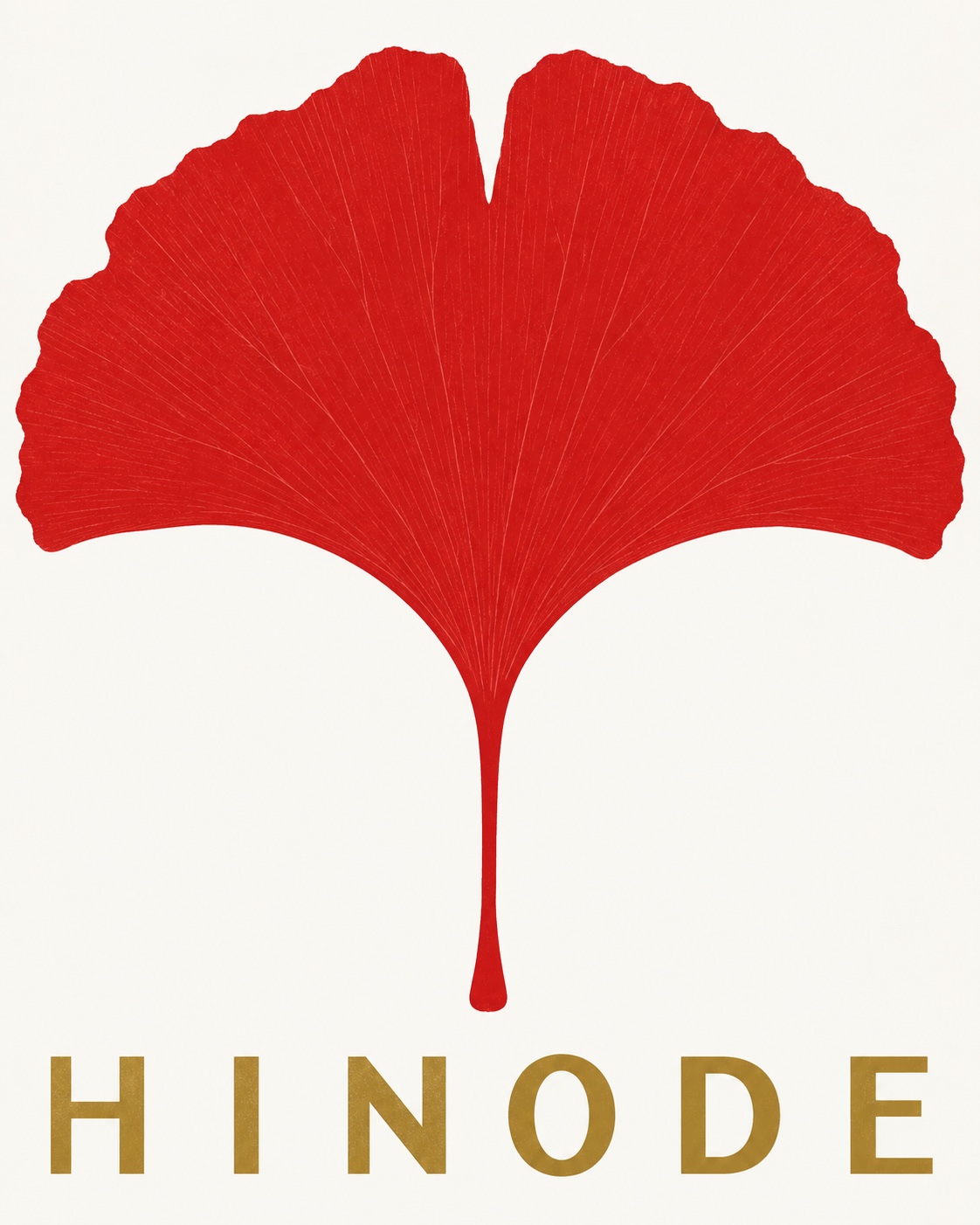
Kamekura took the rising sun from the national flag and gave it the whole sheet, with a wide gold word below. This poster does the same with one red ginkgo leaf. The Swiss grid is there, but the idea is Japanese restraint: say one thing at full size.
Learn to spot it
A single huge red shape on white, gold used for the name only, very wide capitals with generous tracking, symmetry, and emptiness that is clearly deliberate.
Use the idea yourself
Find the one symbol that already means your subject, then make it bigger than feels safe and remove everything competing with it.