Rollo Cuban silkscreen · 1967
Scroll down for the full brand identity study.
Rollo
Design the message so it survives translation. If the picture carries it, the words can be repeated in any language without changing the sheet.
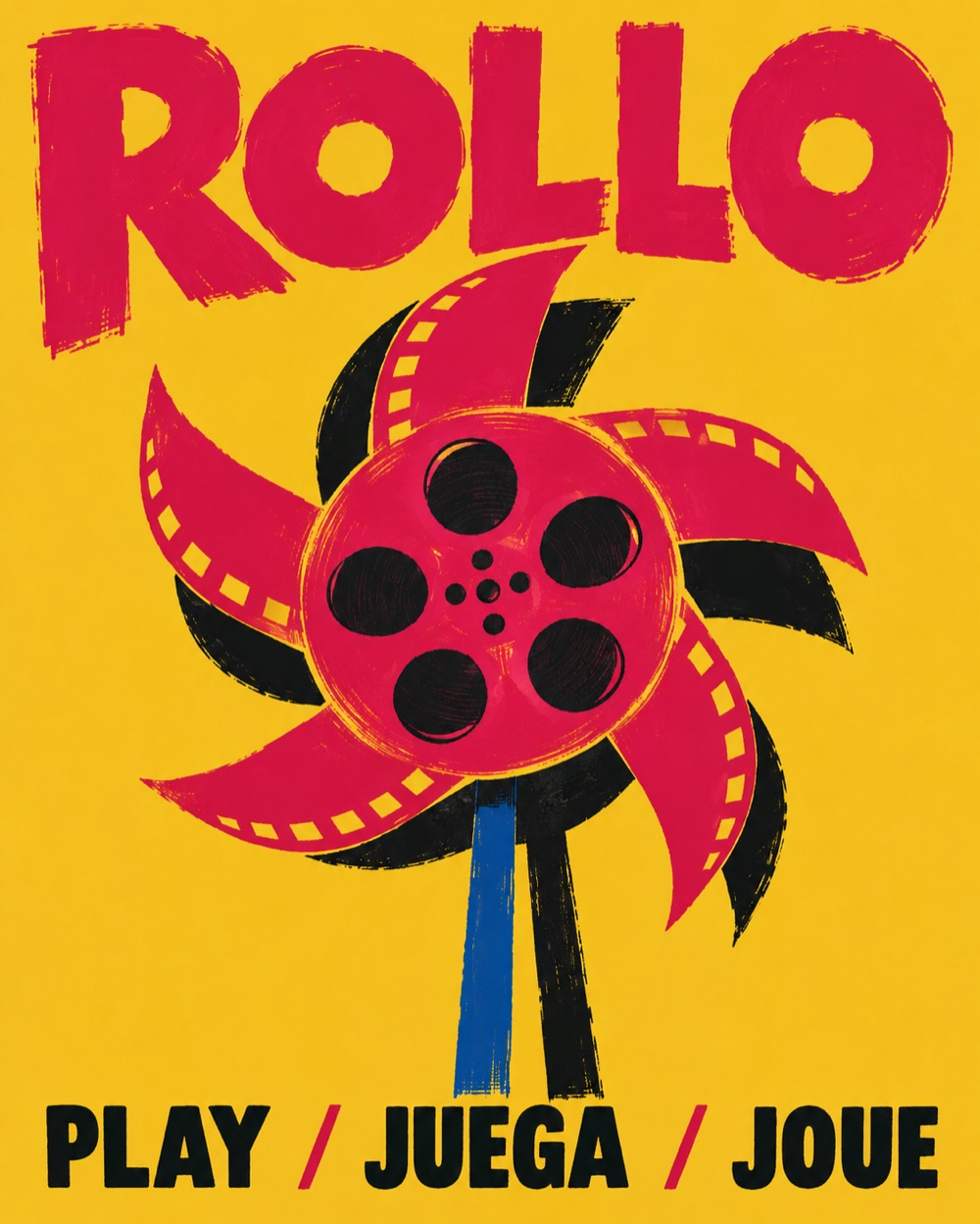
↓ Scroll to the Rollo brand identity system below · View in the archive
Prints are in preparation and are not available to order yet. Frame and room views are visual simulations; they do not confirm the final product, scale or finish.
The identity system below documents the original design study, made before the current poster artwork.
Rollo
Three flat inks and one message, said in four languages.
Cine móvil La Habana 1967
ROLLO
Cine para todos Cinema for all Cinéma pour tous السينما للجميع
ROLLO
35mm · La Habana
Brand Guidelines
Maximum three flat inks. No gradients, no photography, no blends. The constraint of silkscreen is the discipline. Every colour must earn its place — remove one ink and the composition must still work.
ALEX
MITCHELL
Art DirectorNueva York
What breaks it
A CMYK full-colour gradient photograph of a film scene as the background — exactly what the silkscreen method was a reaction against. Unlimited colour destroys the urgency, directness, and political clarity of the three-ink rule.
Film Title
Lesson for students and teachers: Cuban silkscreen, 1967
The rule behind Rollo
Design the message so it survives translation. If the picture carries it, the words can be repeated in any language without changing the sheet.
Eduardo Muñoz Bachs · ICAIC film posters · and OSPAAAL · 1966–70
Learn how it works
Cuba had no offset presses to spare, so film and solidarity posters were pulled by hand in silkscreen. The OSPAAAL posters went out to three continents, which is why the message runs in more than one language.
Learn to spot it
Two or three saturated flat inks, a bold simple emblem, a black shadow printed slightly off, and the same line repeated in three languages across the foot.
Use the idea yourself
Design the message so it survives translation. If the picture carries it, the words can be repeated in any language without changing the sheet.
Make something (10 minutes)
Make a poster that anyone could understand, whatever language they speak. Only the title may be words.
Talk about it
“What does a picture say that words can't?”